

ABLE Featured Articles
The Truth About Misbehavior: An ABA Perspective


From Behavioral Problems to Behavioral Meaning: Re-understanding Your Child’s Performance
Do you ever feel like your child simply won't listen, is intentionally being difficult, or is specifically "targeting" you? From the professional perspective of Applied Behavior Analysis (ABA), every behavior carries a specific purpose—whether it is seeking attention, escaping a demand, or simply expressing an internal emotion.
When we look past the surface to see the true needs behind a behavior, we can provide the most effective support. Below is a deep psychological analysis and practical recommendations for three common behavioral challenges in children.
Bedtime Hyperactivity: Overtiredness, Not Resistance
When a child becomes overly active or refuses to go to bed, it is often misinterpreted as a deliberate challenge to parental authority. However, the physiological mechanism behind this is often the exact opposite of what we expect.
Behavioral Presentation: Hyperactivity, refusal to sleep, and resistance to bedtime instructions.
The Reality: The child’s body may actually be in a state of "overtiredness." This causes the brain to release stress hormones (such as cortisol) to maintain alertness, leading to a physiological overreaction.
Practical Solutions:
Establish a Consistent Routine: Maintain the same bedtime sequence every day (e.g., bath → storytelling → bed) to provide the child with a sense of predictability.
Practice Co-regulation: Stay calm and use a soft tone. Your composure helps the child regulate their own nervous system rather than escalating the conflict.
Optimize the Physical Environment: Dim the lights, play soft music, or use a night light to help the senses "cool down."
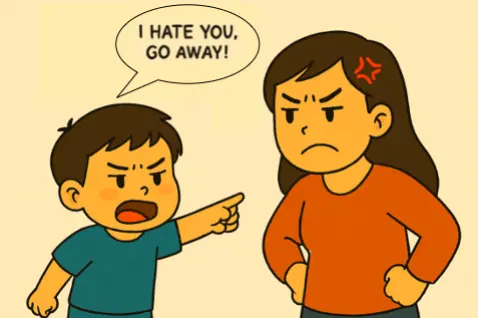
Unkind Language: A Lack of Emotional Regulation Skills
When a child says "I hate you" or "Go away," parents often feel hurt and interpret it as a sign of disrespect or a character flaw. In reality, this is often a sign that the child has hit a bottleneck in expressing their emotions.
Behavioral Presentation: Using aggressive language like "I hate you" toward adults or peers.
The Reality: The child is experiencing intense distress but lacks the executive function to manage strong emotions or the skills for "appropriate communication."
Practical Solutions:
Validate the Emotion: Prioritize empathizing with the child's feelings. For example: "I can see that you are feeling very angry right now."
Discontinue the Argument: Avoid arguing in the heat of the moment. Instead, say: "We can talk about this when you are ready."
Teach Replacement Language: Guide the child to use specific, appropriate expressions, such as: "Please don't do that" or "I don't want to do this because it is too hard for me."
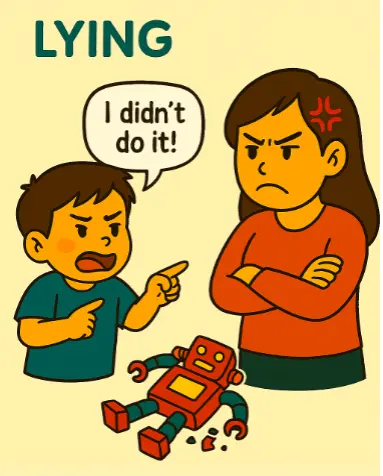
Lying: An Escape Mechanism for Coping with Pressure
Many parents view lying as a moral issue. However, from an ABA perspective, lying is often a learned behavior used to avoid consequences that the child perceives as threatening.
Behavioral Presentation: Hiding the truth, exaggerating, or intentionally disobeying.
The Reality: The child may be under excessive pressure from high expectations, or they may fear disappointing adults and choose to escape due to anxiety over negative punishment.
Strategic Action Table for Addressing Lying
| Strategy | Action Details |
|---|---|
| Neutral Consequences | If a child fails to meet an expectation, provide a logical neutral outcome rather than a purely emotional punishment. |
| Praise Honesty | Reinforce the act of telling the truth. Even if the content is negative, acknowledge and validate their "honesty." |
| Collaborative Problem-Solving | Focus on solutions. Guide the child in discussing "what can be done differently next time" to reduce blame. |
| Adjust Expectations | Assess if expectations are too high. Set achievable goals to gradually build the child's capacity for accountability. |
FAQ: Understanding Child Behavior Through a Science-Based Lens
This is often not a sign of "excess energy" but rather "overtiredness." When a child misses their sleep window, the brain releases cortisol to keep them going. This physiological spike makes them appear hyperactive. The best approach is to start a calming routine earlier to prevent the body from entering this "fight or flight" state.
Immediate punishment often escalates the conflict because the child is already in an emotional crisis. Instead, acknowledge their anger first to help them de-escalate. Once they are calm, you can teach them "replacement language"—better ways to express their frustration without being hurtful.
Not necessarily. In behavioral science, lying is frequently an "escape mechanism." Children often lie because they are afraid of the consequences of their actions or afraid of failing to meet high expectations. Focus on making "the truth feel safe" by praising honesty, even when they admit to a mistake.
A punishment is often intended to cause distress or take something away to exert control. A "neutral consequence" is a logical result of an action. For example, if a child makes a mess, the neutral consequence is that they must help clean it up. This teaches responsibility without the fear associated with traditional punishment.
Behavioral change is a process, not an event. You may even experience an "extinction burst," where a behavior temporarily gets worse before it gets better as the child tests the new boundaries. Consistency is key; maintaining the same response every time is what eventually leads to lasting change.

