An important stage for children to explore the world, learn social norms, regulate emotions and develop a sense of responsibility

ABLoom Program

Kindergarten is not just a place to learn ABCs and sing songs. Kindergarten learning is an important stage in life. In kindergarten, children begin to explore and are curious about the impact of their behavior on the environment and peers. They find that the world is complicated and not everything can happen according to their wishes. They need to learn to follow classroom rules, follow the teacher's instructions, share toys with other classmates, regulate their emotions, and even use younger children as role models.

I
4.艾苗助長計劃

Service Features

Can my child demonstrate the above skills on the first day of school? If my child has special needs, does it mean that my child cannot master the above?

The answer is No and No. Every child has his or her own pace and method of learning. Children of this age are like a sponge or soft clay. They absorb different information every day, and their behavior is moldable. This is the golden period of learning in life.

Maintain a 1:1 teacher-student ratio

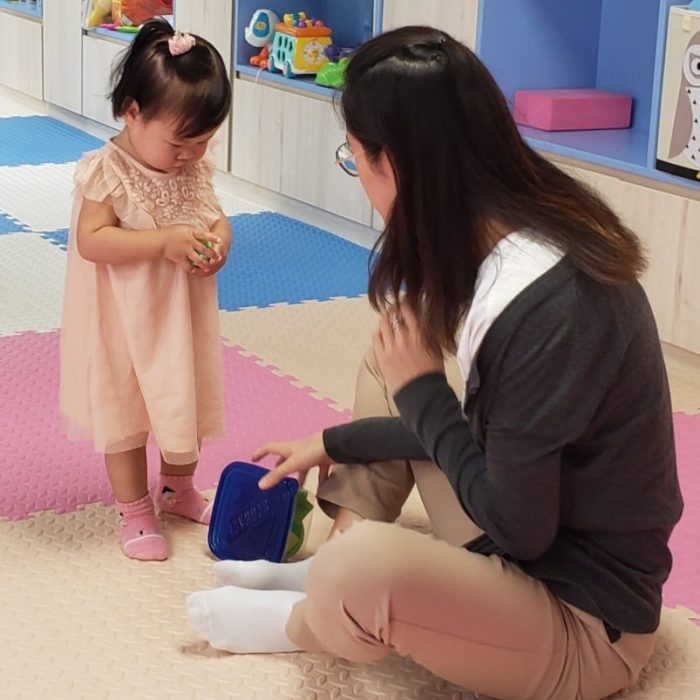
We set up a kindergarten simulation classroom to maintain a one-to-one teacher-student ratio and gradually reduce the teacher-student ratio based on the students' progress.

Self-care training

Classroom routine, eating refreshments, going to the toilet
Personal hygiene, queuing, respecting personal space

Integrating ABA behavioral therapy into teaching

Use rewards, simplify concepts, and collect data to assess learning progress

Preschool training

Learn to concentrate
Sit still and raise your hand during group time
Use common stationery (pencils, etc.)

Social skills training

Turn-taking games
Greetings
Cooperative games
Sharing toys

Self-Discovery

Self-understanding; Finding out what they like/dislike; Building confidence

The program targets include

Suspected Autism Spectrum

Focusing on the children's speech ability, exploring their motivation for expression, and assisting them with single-tone and double-tone pronunciation, accurate articulation, complete sentences, etc., we can cooperate with speech therapists to strengthen density training.

Separation Anxiety

Targeted at children's daily life, such as self-care of toileting, dressing, toy sorting and putting away, dining problems, concentration, behavior and emotional management.

Speech Delay

Develop teaching strategies based on the current level of children, so that they can understand the knowledge needed for daily life, including: food, animals, fruits, daily necessities, colors, transportation, numbers and words, etc.

Developmental Delay

Focus on the interaction between children and children, children and adults, participation in group games, listening to instructions, and following classroom rules or game rules.

Preparing for Kindergarten

Focusing on how young children play with toys, we can inspire their learning motivation from toys, help their brains think, and learn how to share toys with others.

H

Class Time

Morning class: 9:15AM (2.5 hours/2 hours)

Afternoon class: 1:00PM (2.5 hours) - Meal training available
                              1:15PM (2 hours)