
What is ABA (Applied Behavior Analysis)?
The full name of ‘ABA’ is ‘Applied Behavior Analysis. ABA is a scientific method with over 50 years of history, dedicated to studying human behavior and learning patterns. The term “analysis” emphasizes that this scientific approach requires therapists to continuously analyze collected data, monitor a child’s learning progress and challenges, and develop appropriate strategies.
Years of scientific validation have proven that ABA can effectively improve issues in children with autism, including cognition, language development, social skills, and self-care abilities. Additionally, ABA is highly beneficial for children requiring extra support, such as those with ADHD, developmental delays, oppositional defiant disorder, dyslexia, and emotional challenges.


Why does ABA work?
Applied Behavior Analysis (ABA) helps us understand the motivations behind behavior, identify the environmental factors that affect the behavior, and then encourage learning by changing the behavior. When children behave correctly, we will give praise to improve the continuity of good behavior. For complex behaviors or skills, such as brushing teeth, communicating in complete sentences, playing turn-taking games with friends, etc., ABA will divide them into smaller individual teaching units to teach.
On the other hand, ABA will not reward children's problem behaviors, such as not following the rules, losing temper or attacking others. ABA focuses on finding out what motivates children to learn (it may be a favorite object or an activity they are very involved in). Using these motivators can encourage them to learn new skills and integrate them into daily life, enhance self-confidence, and make children more independent.


What can you get through ABLE training?
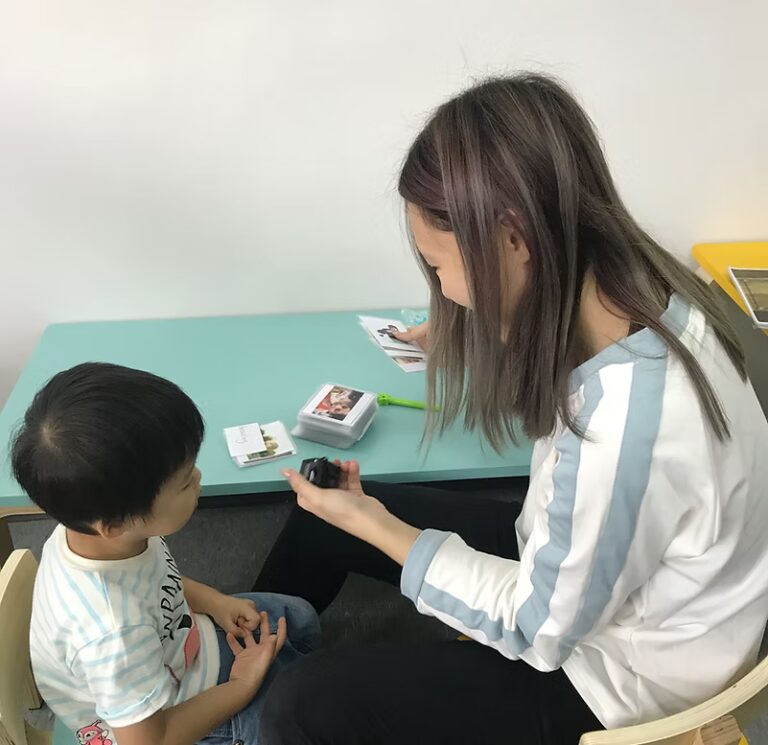
Autism is also known as autism spectrum disorder. Even if two children are diagnosed with autism, their characteristics and abilities are completely different. Therefore, the training content must be tailored to the individual needs of the child.
The training content includes different skills:
- Languages
- Self-care ability
- Social skills
- Classroom Rules
- Game Tips
After the initial assessment, we will understand the child's strengths and areas that need to be strengthened, and then develop an individual learning plan (IEP) and long-term goals to improve their comprehensive abilities and achieve the ultimate goal of entering school and integrating into society.
In addition, Ailan will give parents appropriate advice based on the child's specific situation, so that parents can flexibly apply behavioral training techniques in daily life.
In addition, we also use:
Discrete Trial Teaching (DTT) using ABA teaching methods
"A" (Antecedent) is the "antecedent", through observation to understand the antecedent of the problem behavior.
"B" (Behavior) is "behavior", guiding children to deal with the behavioral performance of the "antecedent".
“C” (Consequence) stands for “Consequence”, which refers to the therapist’s approach to “behavior”.
Natural Environment Teaching (NET)
It is an aid to DTT, and the goal is to apply the skills learned in DTT to daily life and even group games.
FAQ
The word "reinforcement" is often associated with ABA training. So how much "reinforcement" is needed to achieve noticeable improvement?
All living things have "behavior". ABA has a wide range of applications and can be used to improve business management, government policies and even children's behavior.
ABA focuses on understanding why children do what they do and what maintains this behavior, and then encourages learning by changing their behavior. When children behave correctly, we will give praise to increase the persistence of good behavior. For complex behaviors or skills, such as brushing teeth, using complete sentences to communicate, playing turn-taking games with friends, etc., ABA will divide them into smaller individual teaching units to teach. ABA will not reward children's problem behaviors, such as not following the rules, losing temper, or attacking others. ABA focuses on finding out what drives children to learn (it may be an object they love or an activity they are very involved in). Using these driving forces can encourage them to learn new skills, integrate them into daily life, enhance self-confidence, and make children more independent.
The training content must be tailored to the individual needs of the child, including different skills:
- Language skills
- Self-care skills
- Social skills
- Classroom rules
- Playing skills
After the initial assessment, we will understand the child's strengths and areas that need to be strengthened, and then formulate an individual learning plan (IEP) and long-term goals to improve their comprehensive abilities and achieve the ultimate goal of entering school and integrating into society. In addition, Ailan will give parents appropriate advice based on the child's specific situation, so that parents can flexibly apply behavioral training techniques in daily life.

