




001

Welcome to ABLE
Centre for ABA therapy

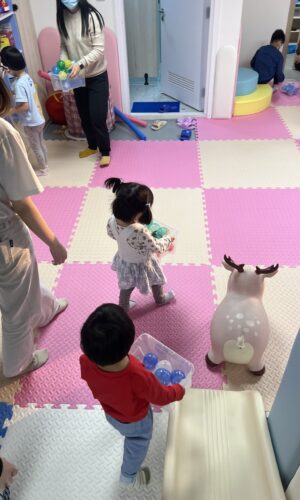
ABLE stands for Able to Believe, Capable to Achieve. It reflects our principle that every child can succeed when they believe in themselves.

We’re a team of passionate, experienced, and professional ABA behavior therapy analysts. We are united by one mission with the belief that using Applied Behavior Analysis can enrich the lives of children with special needs. 

We support children with language disorders, autism, dyslexia, hyperactivity disorder, anxiety and other special needs.

003
002
Able
Our professional services

Give the Best to children

We offer a range of services designed to support each child’s unique growth and development:

  • ABA Comprehensive Development Assessment
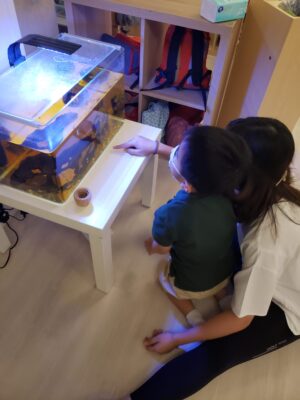
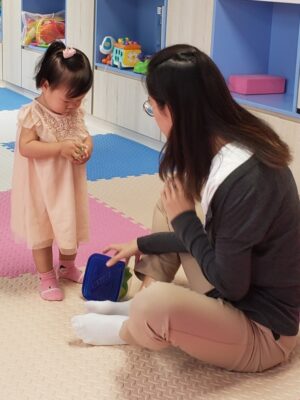
  • 1-on-1 ABA Training
  • Shadow teacher Support for school
  • Preparation for Kindergarten

Each service is tailored to build a confident and successful future for every child.

C
T
Our Course Director

Gigi Wong

Gigi 768x530
  • 7 years of Board Certified Behavior Analyst (BCBA)
  • Bachelor of Science in Psychology, University College London, UK
  • Master of Applied Clinical Psychology, University of Warwick, UK
  • 12 years of experience in Applied Behavior Analysis (ABA)
  • Supervision for staff and certificants, consultation to kindergarten, local and international school
  • Kindergarten, international school, shadow teacher, ABA on-campus support

While completing her Bachelor’s degree in Psychology at University College London, Gigi developed a particular interest in child development. She later earned a Master’s degree in Applied Clinical Psychology from the University of Warwick in the UK. During her time in the UK, Gigi worked as a trainee clinical psychologist with the Primary Mental Health Team, focusing on early intervention and prevention of mental health conditions, including anxiety disorders, depression, and supporting children with special needs, such as autism spectrum disorder (ASD) and attention-deficit/hyperactivity disorder (ADHD).

After transitioning to Applied Behavior Analysis (ABA), Gigi experienced firsthand the transformative impact of behavioral therapy on children. With a clear goal in mind, she accumulated over 1,500 hours of supervised practice and completed a two-year BCBA-approved program to become a Board Certified Behavior Analyst (BCBA). Gigi has worked with children aged 18 months to 16 years, gaining extensive experience in delivering one-on-one and group-based interventions for children with autism, learning delays, developmental delays, speech delays, anxiety disorders, aggressive behaviors, and social-emotional challenges. She has provided training in various settings, including in-home programs, center-based programs, and as a shadow teacher, helping children generalize skills across different environments to support inclusive education.

Gigi takes pride in gradually reducing students’ reliance on her support, enabling successful integration into mainstream classrooms. She celebrates each child’s incremental gains in independence and communication. Her goal is to help more young children through personalized ABA programs. This dedication has driven her to take a more leadership role to inspire and train emerging therapists and coach parents in using ABA techniques to support children’s development.

Check out our reviews

Parents' real evaluation of our center

Children here are filled with laughter and joy while learning! Come hear their heartfelt words!

ABA-Service Features

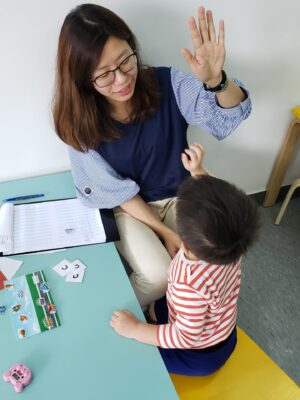
Positive and reward-based training

L
Q
Our Featured Articles

Parenting Tips

Discover practical and insightful parenting tips designed especially for caregivers. From day-to-day care to effective parent-child interaction techniques, our easy-to-follow tips empower you to navigate parenting with confidence and ease. Join us on this journey and find support that helps make your path as a parent smoother and more rewarding.

聯絡我們

Contact Form EN

FAQ

Q. How many classes do you have in a week?

Research suggests that ABA behavioral therapy requires intensive training (20 to 40 hours), personalized and targeted at all aspects of development, and training must be done in a one-to-one teacher-student ratio before it can be successfully transferred to a group setting. But at the same time, we understand that such intensive training is not easy to achieve for a child who is in school or participating in other training. At Ailan, we will flexibly arrange the time for families and children to achieve the best results from the training.

Q. Who is suitable for ABA behavioral therapy? Is it only suitable for children diagnosed with special needs?

Using ABA behavioral therapy, we help children from 18 months to young adulthood, teaching them practical life skills to be able to independently handle everyday events. ABA behavioral therapy is suitable for children with behavioral or emotional problems, and children with (or suspected of having) special needs: autism spectrum, Asperger's syndrome, hyperactivity disorder, anxiety, developmental delay, language delay, attention disorder, etc. Therefore, children who come to Alan do not need any diagnosis. Our main focus will be on teaching and improving children's social, play, language, cognitive, and self-care abilities.

When should I start ABA training?

Since precursors to ASD or other problem behaviors typically emerge around 18 months of age, assessments may not be feasible until children are 2–3 years old. However, whether a child is diagnosed is not critical; what matters is that early ABA training can significantly reduce the likelihood of problem behaviors developing, enabling children to learn appropriate behaviors from the start.

Vietze & Laz (2018) provided ABA training to 106 toddlers under 40 months old, with each child receiving an average of 290 hours of 1:1 instruction (5 hours per week for approximately one year). Upon reassessment, significant improvements were observed in various developmental areas, including IQ, communication, motor skills, social and emotional regulation, adaptive behavior, and reduction of ASD symptoms and learning difficulties. Other studies also indicate that children who receive ABA training before age 4 show greater improvements compared to those who begin after age 4 (Lovaas & Smith, 1988; Turner & Stone, 2007).

Contact Us