According to B.F. Skinner, there is a specific reason behind every behavior of children. Understanding the motivations behind their behaviors can enable us to respond appropriately to these behaviors to reduce their inappropriate behaviors and increase their good behaviors.
Sensory/self-stimulatory behaviors:
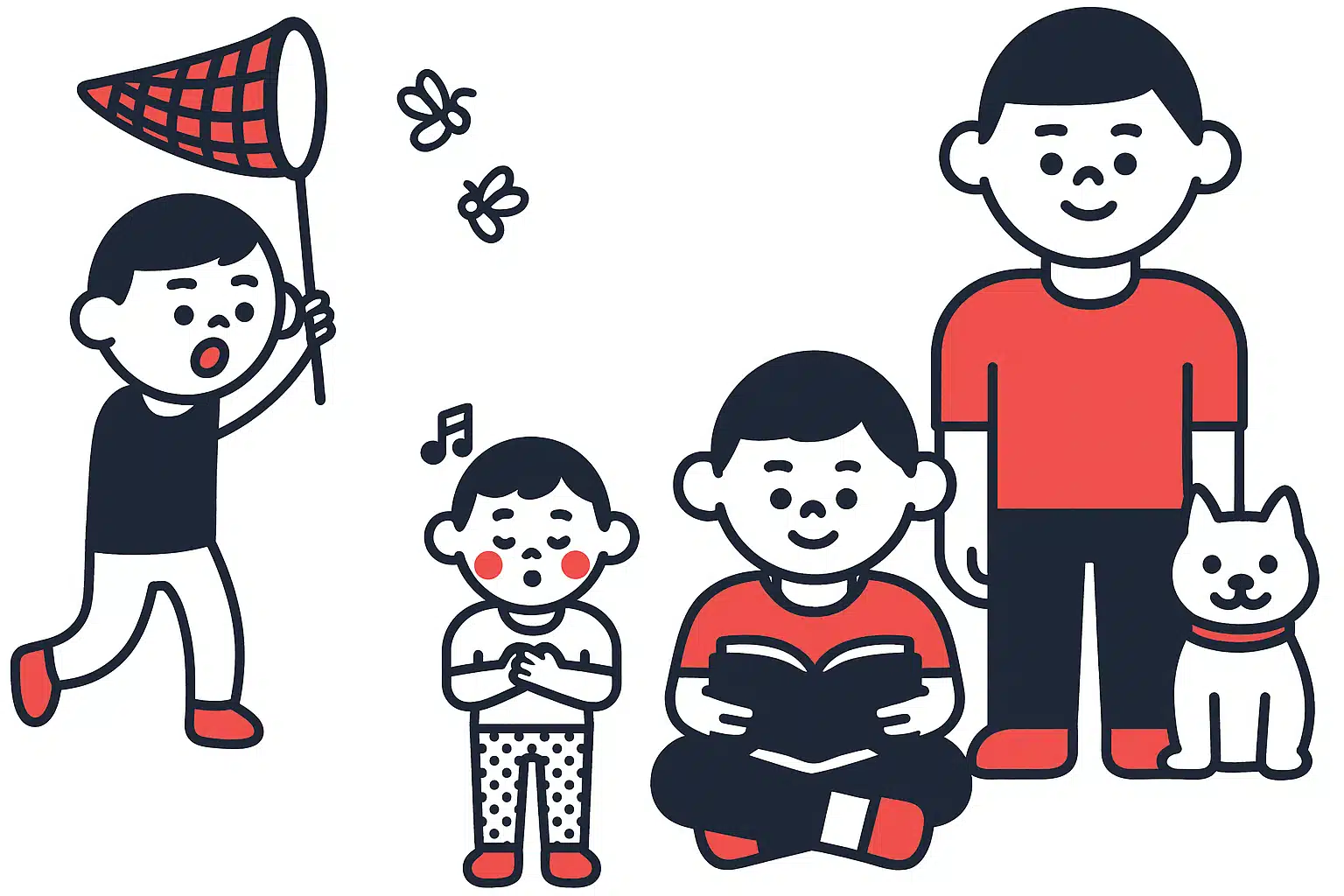
These self-stimulatory behaviors are related to our body’s sensory system. These behaviors are mainly caused by the child feeling good about the process, not necessarily with the help of others. For example, a child may like to scratch his nails, slide quickly on the slide, jump on the trampoline, repeat certain sounds/songs, swing his hands excitedly, or be hugged tightly by his mother, etc.
Escape/Avoidance Behavior:
These behaviors allow them to escape or avoid situations that make them unpleasant. Examples include: skipping songs on a playlist that they don’t like, throwing things they don’t like on the floor, procrastinating on doing homework and chatting with friends, asking to go to the bathroom during class, spitting out broccoli in their mouths, and covering their ears when they hear fireworks. Because these behaviors allow them to escape from unpleasant experiences, they are more likely to behave the same way in similar situations in the future.
Attention-Getting Behavior:
Many behaviors are designed to elicit a reaction from others. For example, a child may tell a joke to amuse a friend, do well on a test to get a compliment from a parent, or raise their hand to get the teacher’s attention. Children may also behave inappropriately to get attention from their parents when their parents are busy. They may climb on the couch or throw things on the floor, which may result in a scolding, but scolding is also a way to get attention from parents!
Behavior Related to Objects:
Behavior that is performed to obtain a specific object or activity. For example, when a child is told “no” to eat ice cream, he may cry in the supermarket, and the mother chooses to compromise to avoid embarrassment. Then, the next time the child goes to the supermarket, he will cry even harder for ice cream, and even lie on the ground to get ice cream. Another more appropriate behavior to ask for ice cream is to politely and calmly say, “Mom, please buy me ice cream because I did well on the test.”
Important Note
Sometimes, a behavior can have multiple causes at the same time. Take this example:
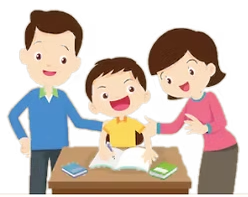
A child is doing homework and suddenly throws everything on the floor, and the mother immediately comes to help him.
Not only does the child avoid homework, but he also gets the attention of his mother. This means that he is likely to do the same problem behavior when he is troubled by homework problems in the future. However, it is especially important to teach children to replace problem behaviors with correct behaviors. In this case, parents can guide the child to ask for a break and let him try to take the initiative to ask his mother: “Mom, can you help me?”