

ABLE Featured Articles
ABA vs speech or ABA & Speech therapy?

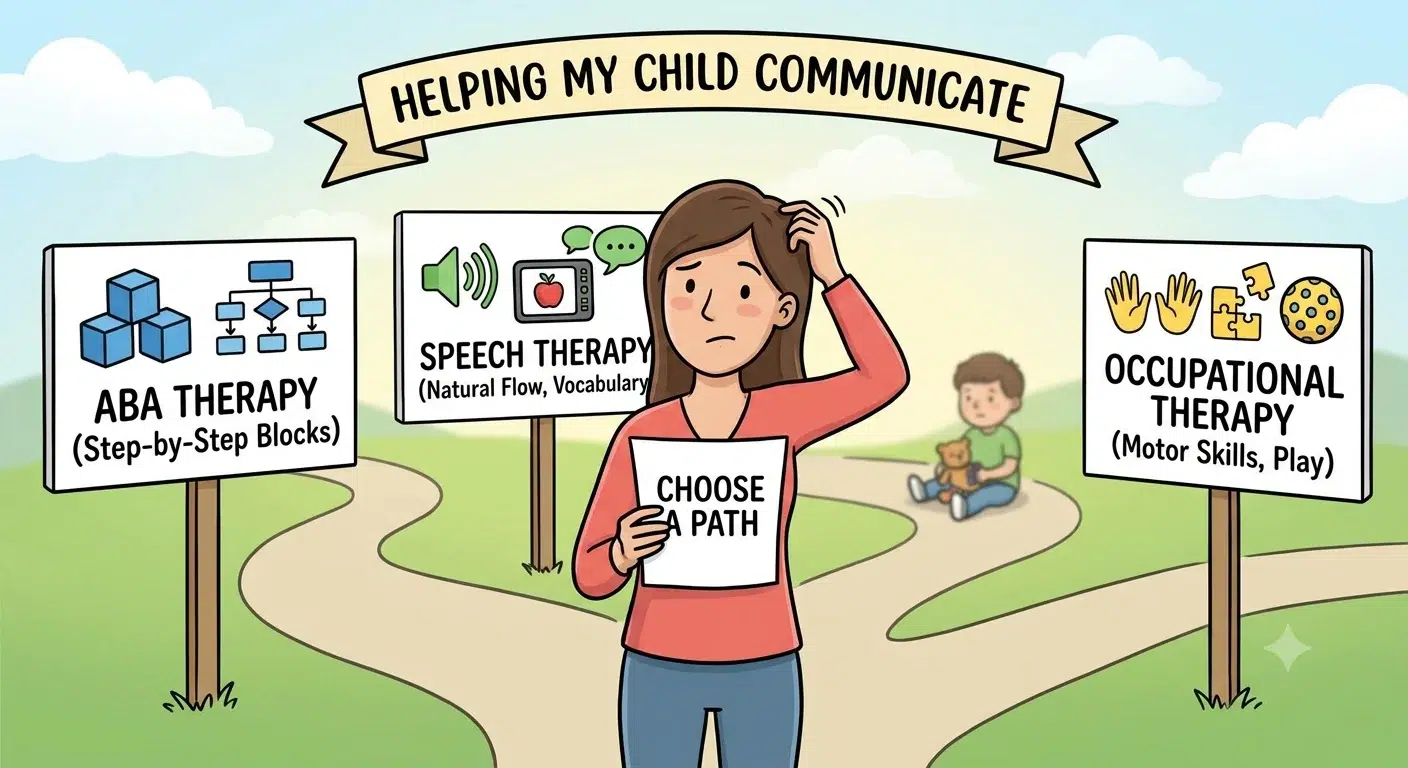
A question I often hear parents ask is: is it okay that they are also attending speech and occupational therapy? If ABA therapy also works with improving language skills, does that mean I don’t need Speech therapy anymore?
This common parent dilemma points to two fundamental truths:
- How ABA can thrive alongside other therapies when there is open communication, mutual respect, and a spirit of collaboration.
- The distinct, complementary differences between how speech therapists and behavior analysts approach language learning.
As professionals—whether in speech therapy, occupational therapy, or behavior analysis—we all share the exact same mission: giving children access to functional communication, autonomy, and independence. However, achieving that mission requires true alignment. Here is a look at why multidisciplinary collaboration matters, how speech therapy and ABA complement each other, and how working together leads to better outcomes for the children we serve.
1. Lessons from the Field: The Need for Team Alignment
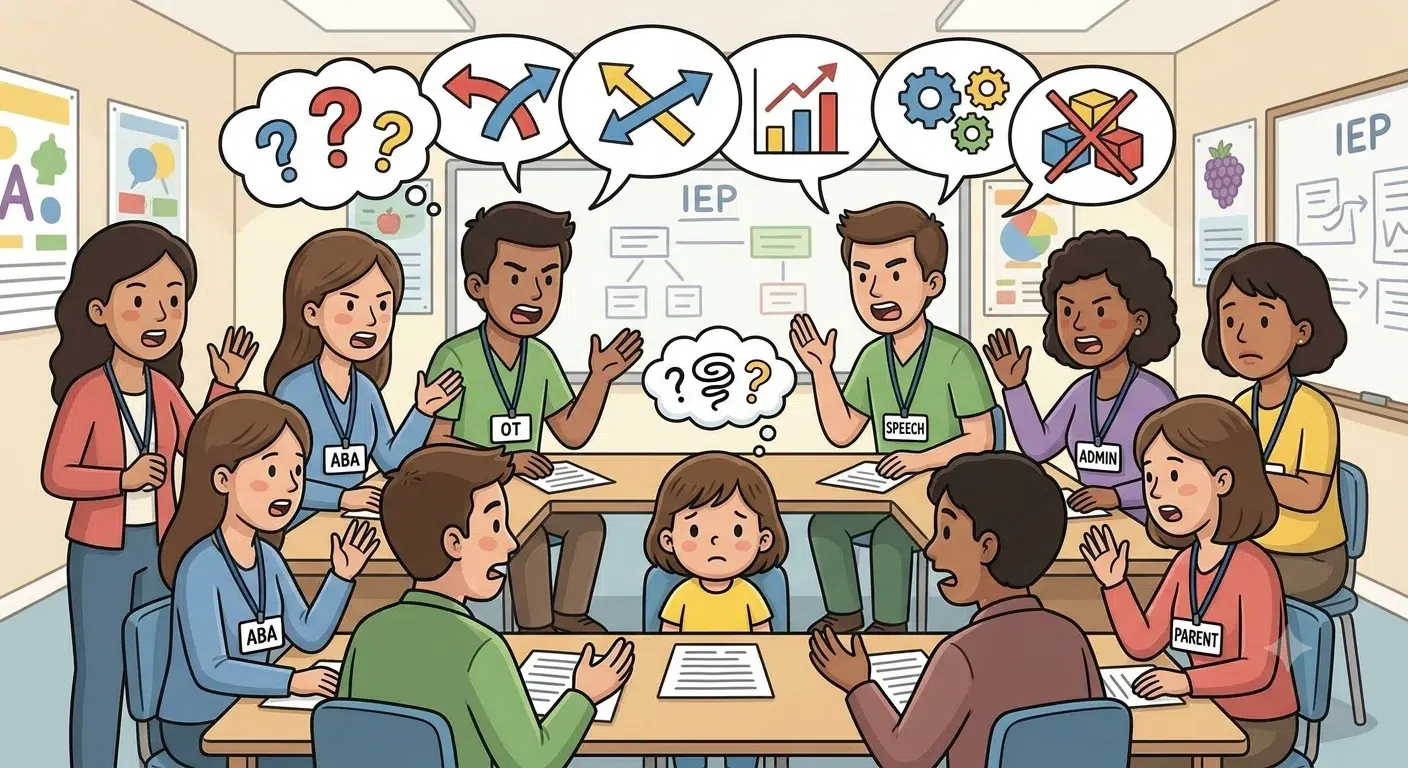
When different disciplines work with the same child without a shared strategy, even the best intentions can lead to confusion.
Early in my career, I saw how easily misaligned approaches could hinder a child’s development. Consider a 10-year-old non-verbal child I worked with who was learning to use an Augmentative and Alternative Communication (AAC) device. We used a bottom up approach in which we taught him to look for and press icons that mattered to him most in that moment and slowly build up that vocabulary to more sophisticated words e.g. more + water. While we explained this approach, the speech therapist’s reply was ‘We should not withhold language. Children should have access to all vocabulary.’ The AAC device language page was filled with icons and words the child didn’t understand and my client had difficulty in scanning them and almost always ended up making non functional or irrelevant requests. This then led to frustration from my client. So my reply at that moment was “handing a child a dictionary without teaching them how to use it. The resource is there, but without guidance, it’s meaningless.”
This was a classic example which led the our client being confused and have to adapt to different systems in different settings. This experience proved that having a tool isn’t enough—the strategy behind how we teach it must be aligned.
2. The difference between speech and aba
| Aspect | Speech Therapy | ABA Therapy (Step-by-Step) |
| Philosophy | Top down approachAnalogy: Therapy shows your child what the whole song sounds like and how to express themselves with it. | Bottom up approachAnalogy: Therapy teaches your child the individual notes and scales so their hands know exactly where to go |
| Main Goal | Natural Flow & Rich Meaning: Teaches words within real-life routines and conversations right away. | Solid Foundations: Teaches one small building block at a time until the child fully masters it. |
| How It Starts | Starts with full sentences and natural play, letting the child explore language in action. | Starts with simple matching and listening, building up to using words independently. |
| Example: Teaching “Apple” | Using it in Real Life:Setup: During snack time or naturally during reading and seeing an apple but may be in contact with other fruits too at the same time• Uses “apple” during snack time or play.• Adds describing words right away (“Mmm, sweet red apple!”).• Focuses on talking about the apple, not just asking for it. | Building the Steps:Set up: clear and distinct target to ensure mastery of apple in understanding and expression 1. Listening: Points to an apple picture when asked “Where’s the apple?”2. Naming: Says or taps “apple” when shown a picture.3. Asking: Asks for “apple” when they want a snack. |
| Example: Using Communication Devices (AAC) | Giving Full Access:• Gives the child access to lots of words on screen from day one.• Helps them learn where buttons are located through motor memory and exploration.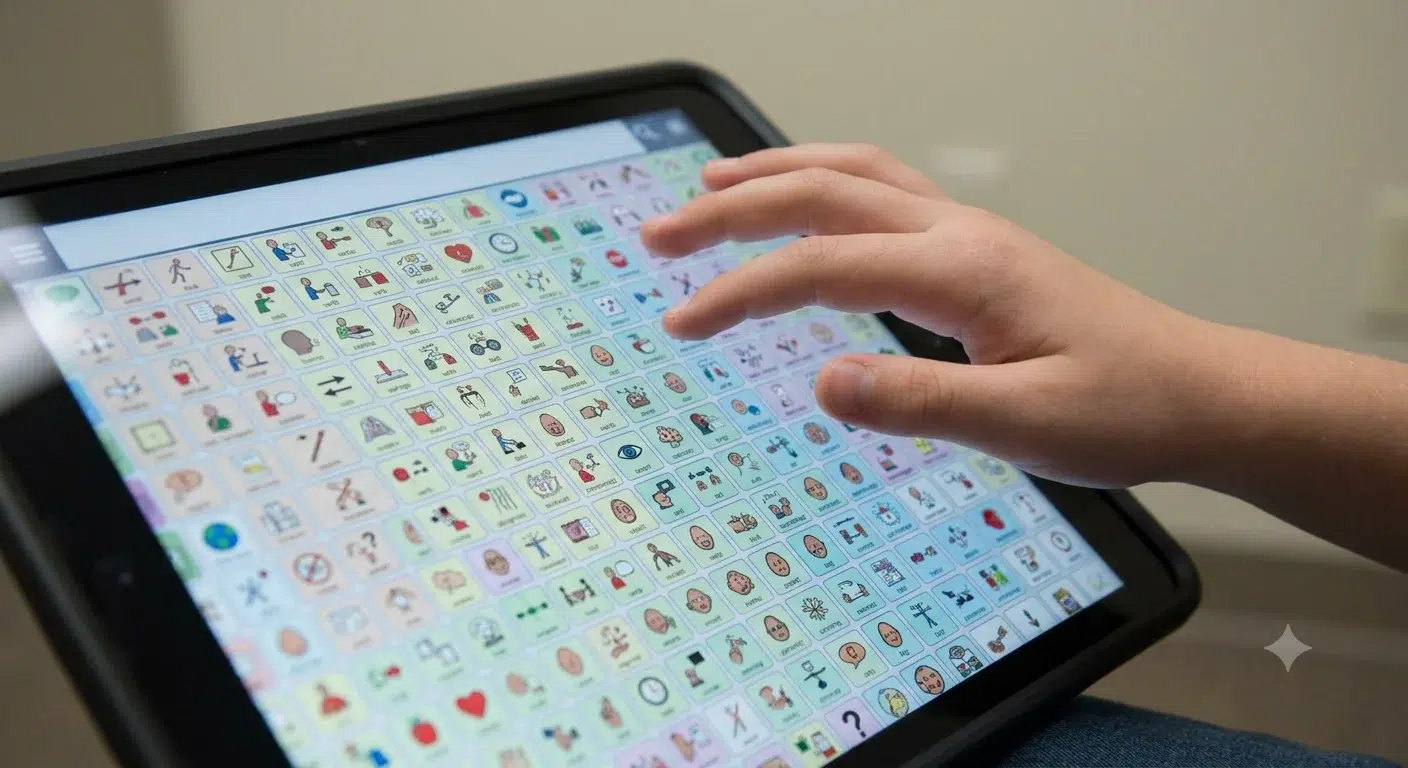 | Starting Small & Growing:• Starts with just a few main buttons (like favorite foods or toys).• Practices over and over so the child feels confident.• Slowly adds more buttons as the child gets used to it.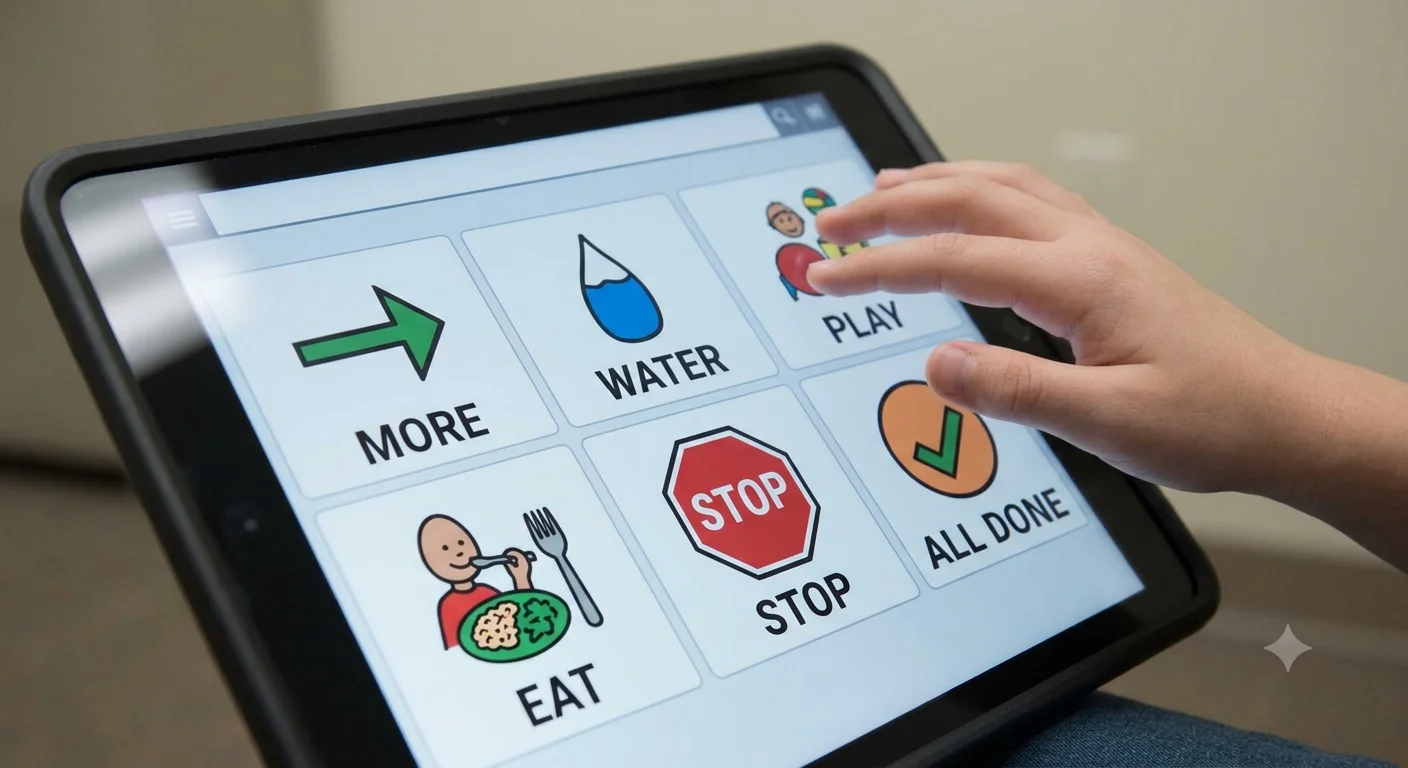 |
| Potential Risk AloneC | Without clear steps, having too many choices or fast-moving situations at once can feel overwhelming for a child. | Without practicing in real-world setups, a child might just repeat words like a robot instead of using them in natural conversations |
| Why We Combine Them | Speech keeps language fun and meaningful, so your child learns how to communicate naturally with family and friends. | ABA gives the clear structure, making sure your child doesn’t feel overwhelmed by too many choices at once. |
Power of collaboration
When our SLP and ABA teams collaborate:
ABA provides the systematic practice to ensure the child accurately understands and labels “apple” across multiple trials.
Speech Therapy provides the linguistic framework to immediately branch “apple” into describing, categorizing, and engaging in social conversation.
Together, the child gets both the solid foundation and the rich language environment they need to thrive.
The Heart of True Collaboration: Respect and Understanding
At the end of the day, true collaboration is about so much more than working under the same roof. It comes down to listening to one another, honoring each other’s expertise, and working with a shared heart.
When ABA therapists value the incredible linguistic insights of Speech-Language Pathologists, and Speech Therapists embrace the supportive, structured steps of ABA, something wonderful happens: our children get the best of both worlds, and they thrive.
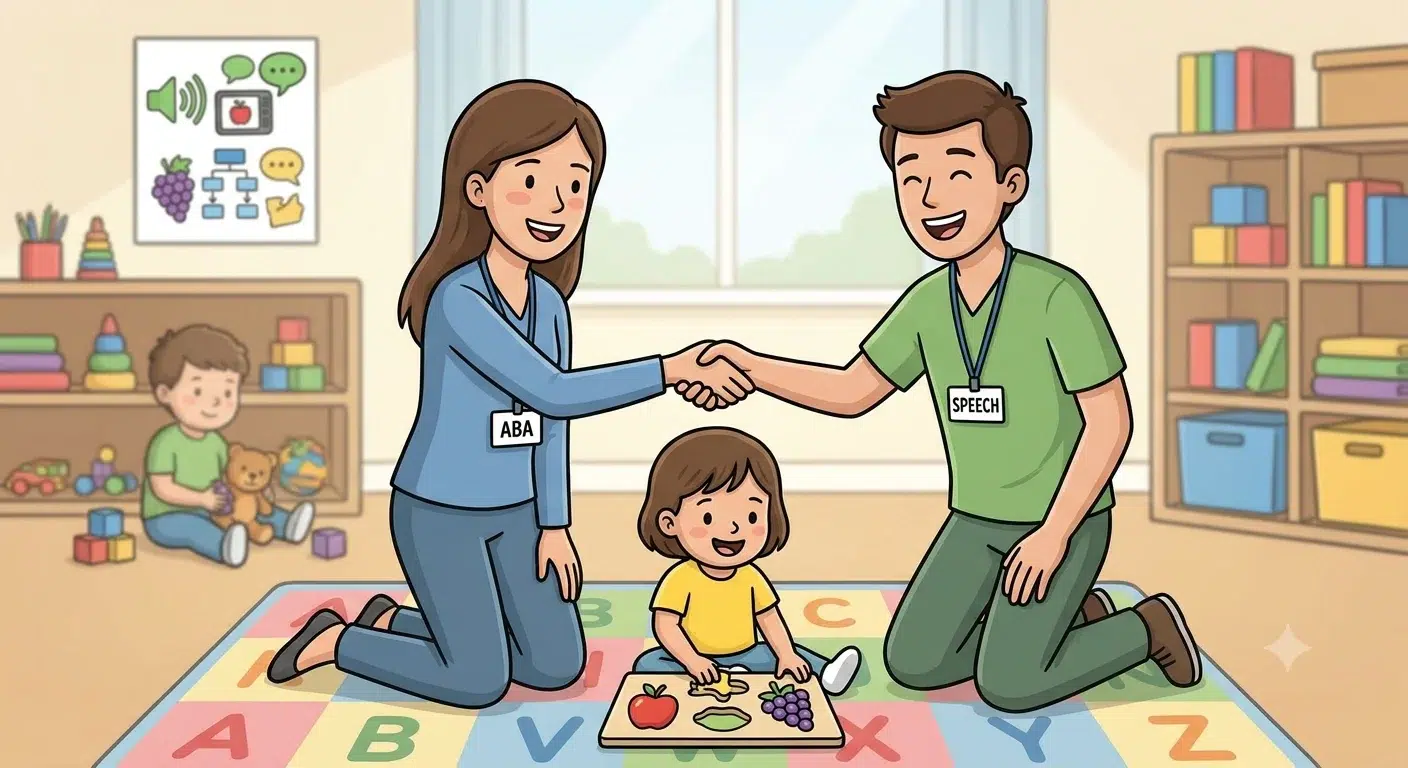
A Success Story Close to Our Hearts
I was reminded of just how powerful this teamwork can be with a sweet little boy who came to our clinic at two years old. At the time, he only had a few words to share with the world. Instead of working separately, our ABA team and his Speech Therapist opened up the lines of communication and became a true team around him:
- We stayed closely connected: We shared detailed session notes back and forth so everyone knew exactly what he was mastering and how to encourage him.
- We leaned into our unique strengths: Our ABA team took on the foundational practice—like helping him confidently identify objects in his environment through gentle repetition. Meanwhile, his Speech Therapist focused on shaping his speech sounds, articulation, and using those new words in rich, everyday conversations.
Because his team was wrapped around him with the exact same goals and consistent strategies, his progress was nothing short of inspiring. He blossomed from saying just a few single words to speaking in fluent, full sentences. Today, he is happily conversational, connecting easily with those around him, and thriving in an ESF school!
So to answer the question : is it okay that they are also attending speech and occupational therapy? If ABA therapy also works with improving language skills, does that mean I don’t need Speech therapy anymore? The answer is a resounding yes—combining these therapies is not only okay, it is often the absolute best path forward for your child.

